Drive through almost any neighborhood in Greenville, Spartanburg, Anderson or the small towns in between and you will see them: older ranch homes and cottages with faded siding, tired porches and kitchens that have not changed in decades. A lot of people look at a house like that and think the only answer is a bulldozer.
We see it differently. When the bones are good, an older home can be brought back to life, and often turned into something better than new. Here is how we think about it, and a real whole home renovation we finished here in the Upstate of South Carolina.
If an older home's foundation and framing are sound, renovating it is usually the better choice over tearing it down. Siding, windows, kitchens, bathrooms, floors and systems can all be replaced. You keep the lot, the established neighborhood and the character of the house.
- Renovate when the structure is solid and the problems are mostly cosmetic or outdated.
- Consider rebuilding when the foundation is failing or the framing is badly damaged.
- Not sure? A walkthrough with an experienced builder will tell you. Request a free walkthrough and quote.
Does an older home really need to be torn down?
Most of the time, no. A house that looks rough is usually suffering from worn finishes and outdated systems, not a failing structure, and every one of those can be fixed.
Peeling paint, stained wall panels, a checkered kitchen floor and an overgrown yard make a house look hopeless. But none of those things are structural. They are the surface. Underneath, a lot of Upstate homes were built with solid framing on good foundations, and they have plenty of life left in them.
Before anyone talks about demolition, the real questions are simple. Is the foundation sound? Is the framing straight and dry? Does the layout work, or can it be made to work by opening a wall or two? If those answers are yes, the house is worth saving.
Not every home needs to be bulldozed. Sometimes it just needs a little imagination and care.
Why renovating often makes more sense than starting over
Every project is different, but here is why we so often recommend renovating an older home instead of replacing it:
- You keep the character. Older homes have proportions, details and original pieces you cannot buy new. A renovation keeps what is special and fixes what is not.
- You keep the setting. Established neighborhoods, mature trees and a lot you already love stay exactly where they are.
- Less goes to the landfill. Reusing a sound structure means far less waste than hauling an entire house away.
- You spend money where it shows. Instead of paying to rebuild walls and a roof that were fine, the budget goes into the kitchen, the bathrooms, the curb appeal and the things you use every day.
- It can be done in phases. A renovation can be planned around your budget and timeline, one area at a time if needed.
A real Upstate whole home renovation, before and after
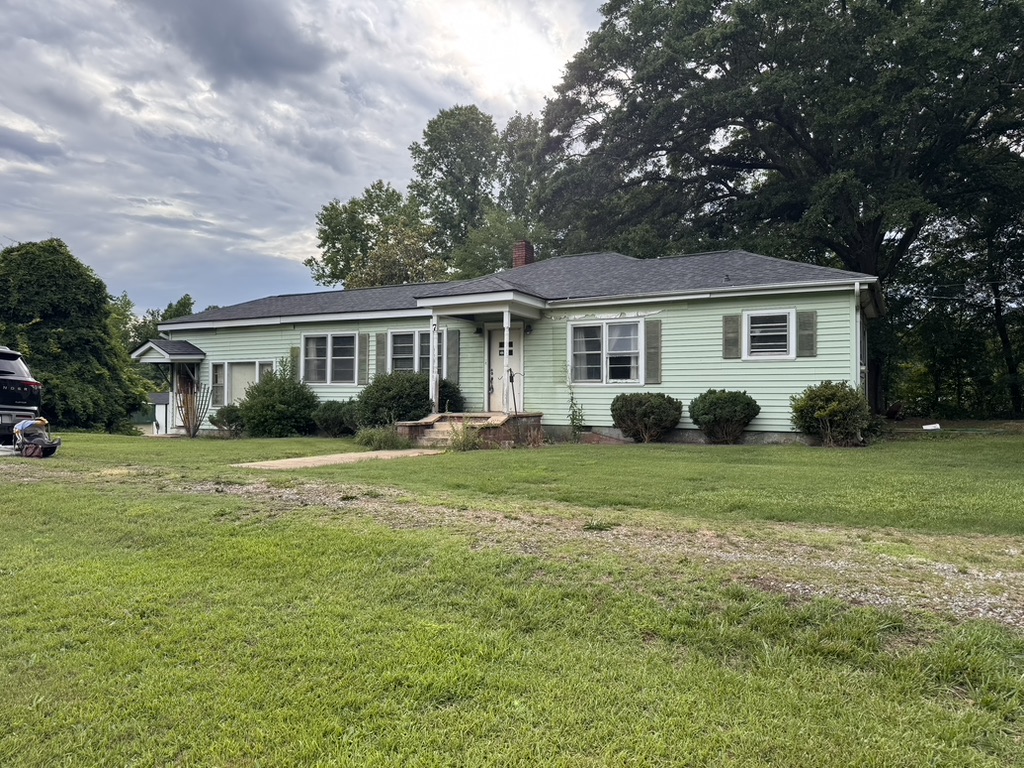
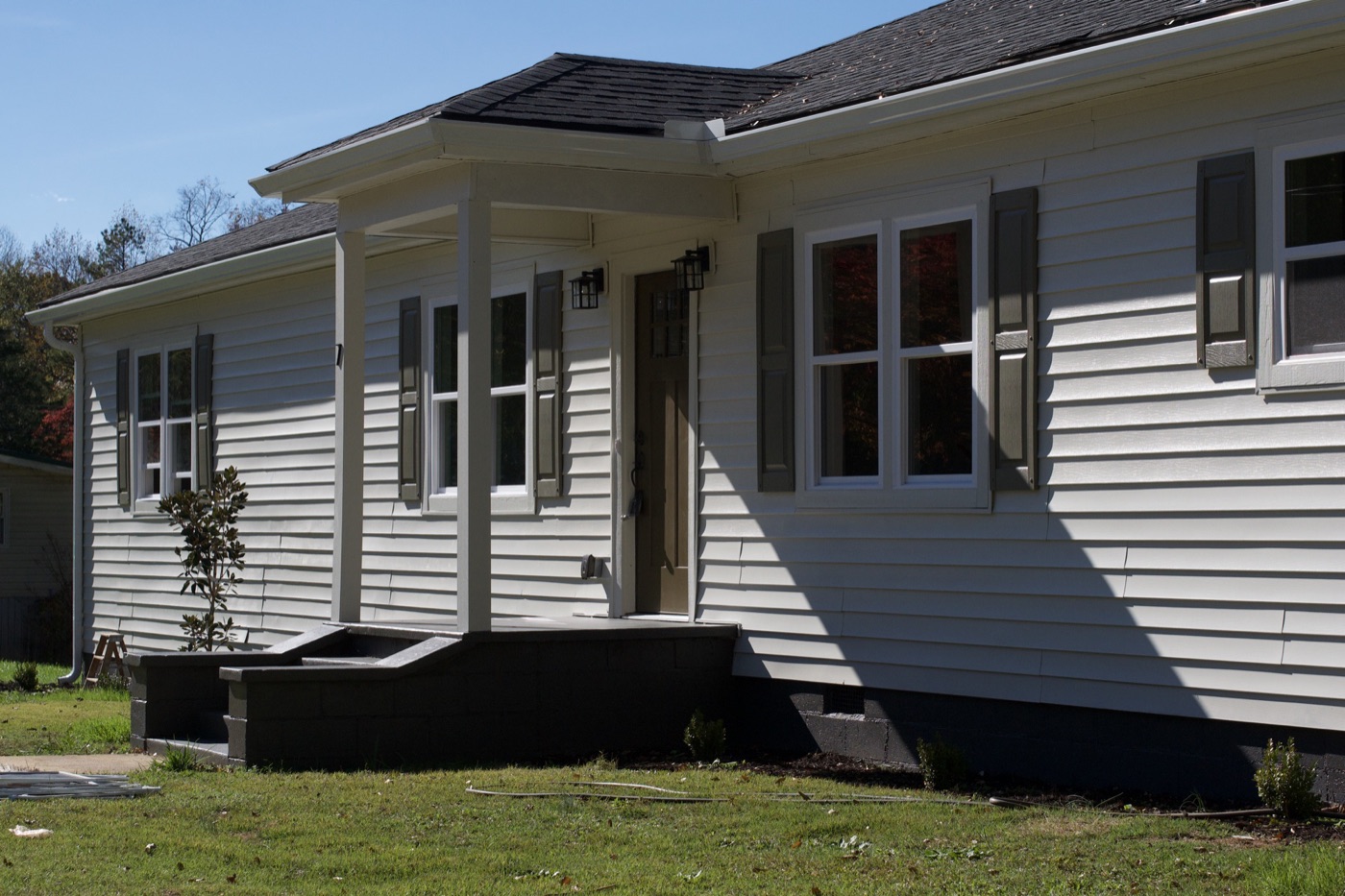
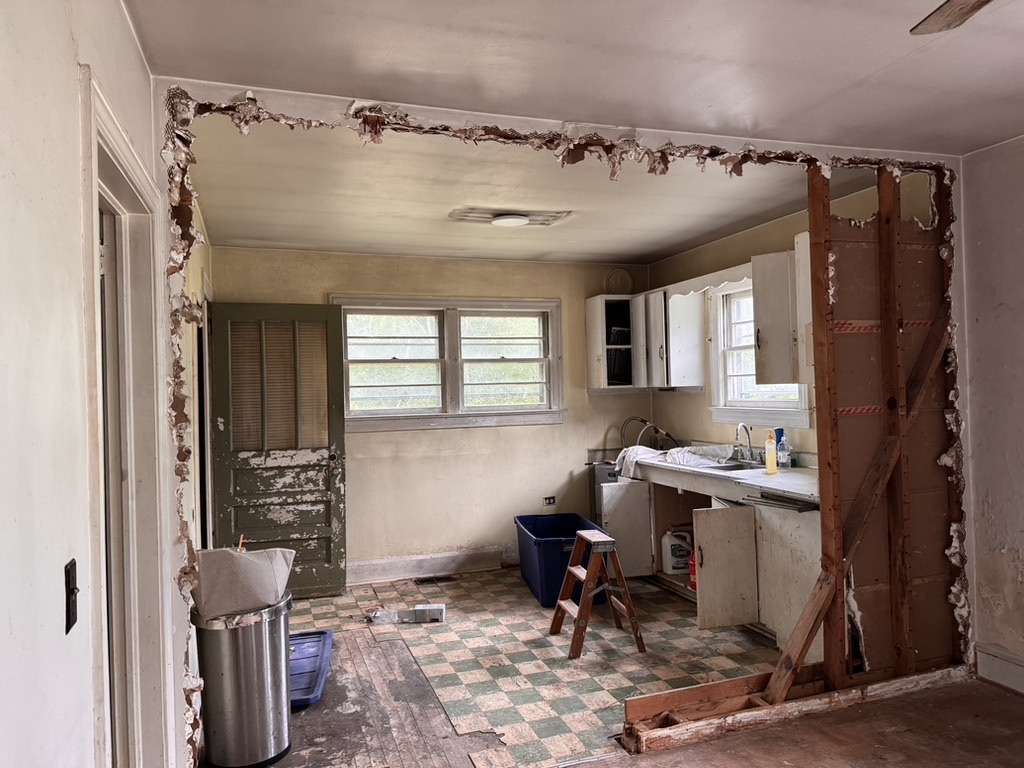
This older ranch home is a perfect example. From the street it looked tired and forgotten. Inside, the kitchen was closed off and dated, and the bathroom had stained wall panels. Plenty of people would have written it off. Instead, we kept the structure and brought every part of the house back.
 Before
 After
The exterior: same house, new first impression
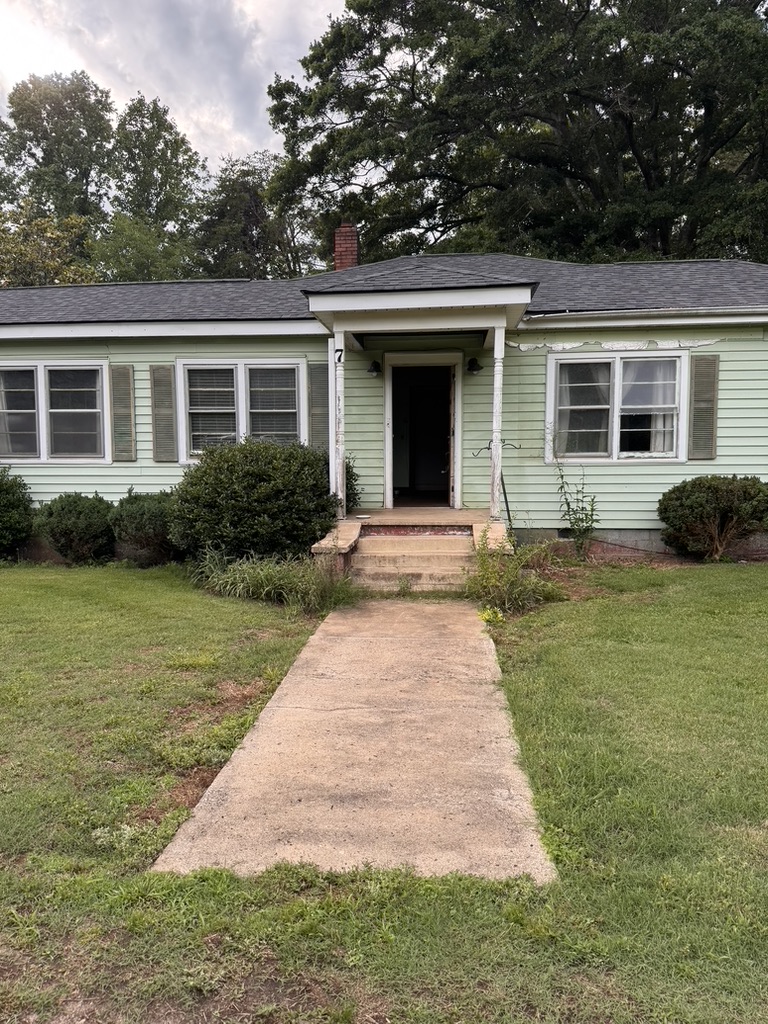
The footprint and roofline did not change. New siding, new windows, shutters and a rebuilt porch, along with a cleaned up yard, gave the home a completely different presence from the street. Curb appeal is one of the fastest ways to show what an older home can become, and it is often where homeowners first feel the difference.
 Before
 After
The kitchen: opened up and built to be used
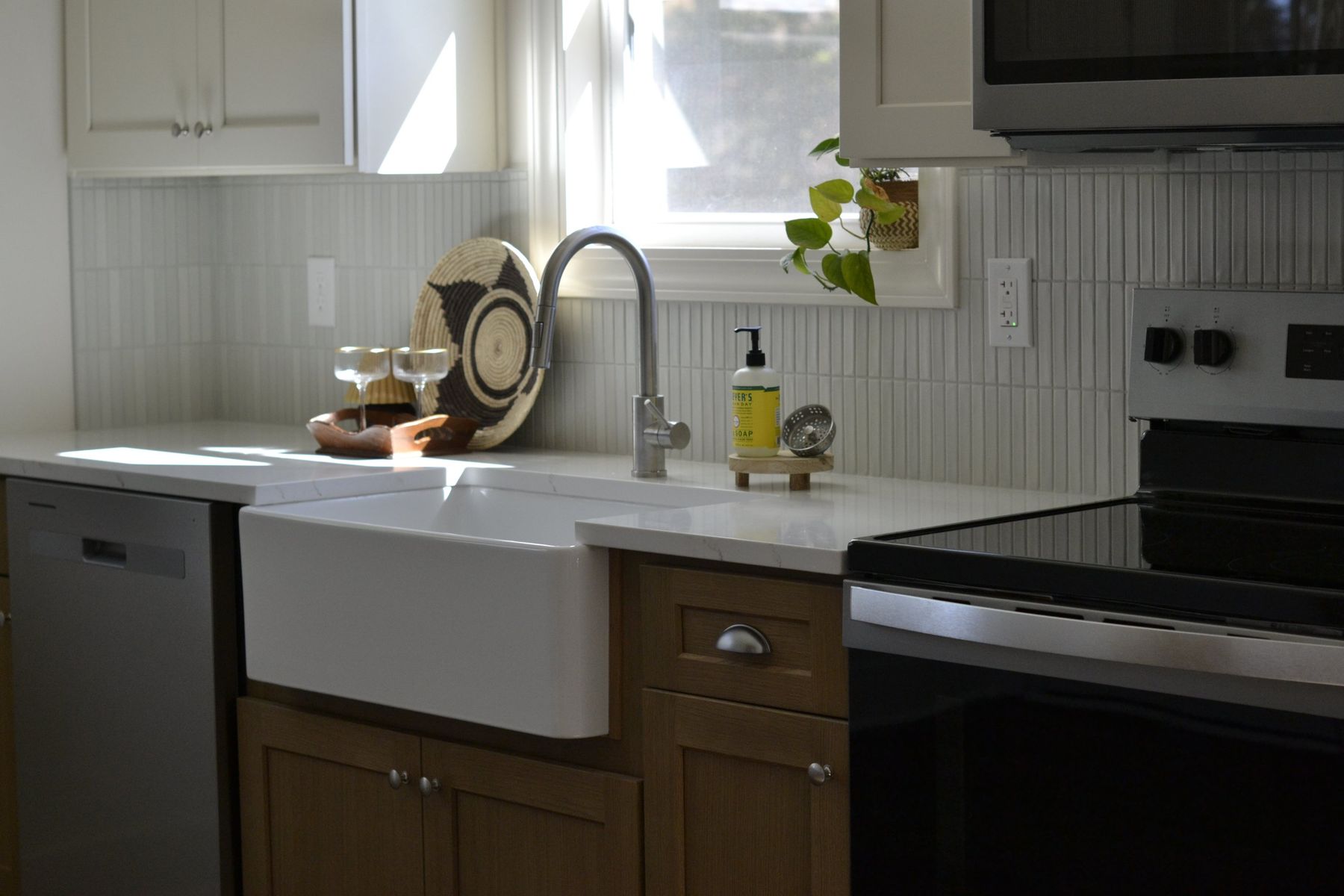
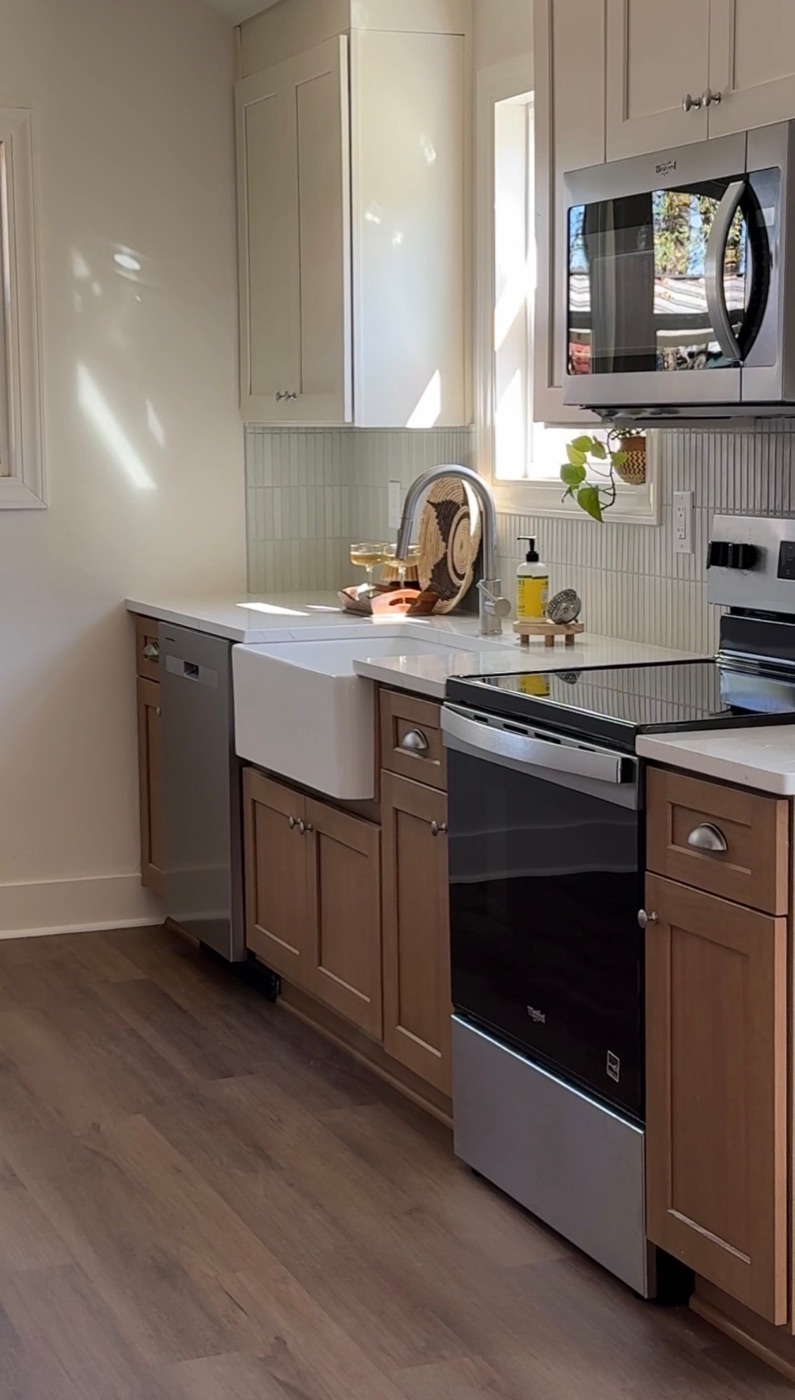
The original kitchen was closed in, with a checkered floor and worn cabinets. We opened it up to let the light and the rest of the house in, then added two-tone shaker cabinets, quartz countertops, a farmhouse sink, a stacked tile backsplash and new flooring. Opening a wall is one of the biggest changes you can make to how an older home feels, and in many houses it does not require starting over.
Have an older home with good bones? Let's talk about what it could be.
Get a Free Quote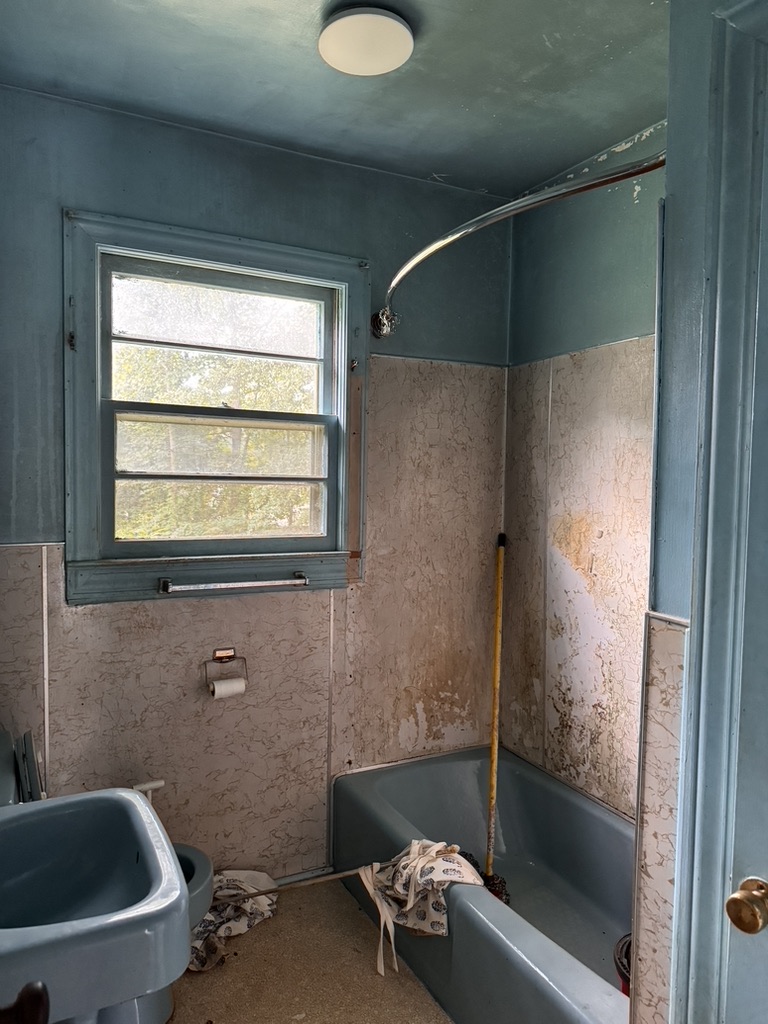 Before
 After
The bathroom: keeping the original blue fixtures
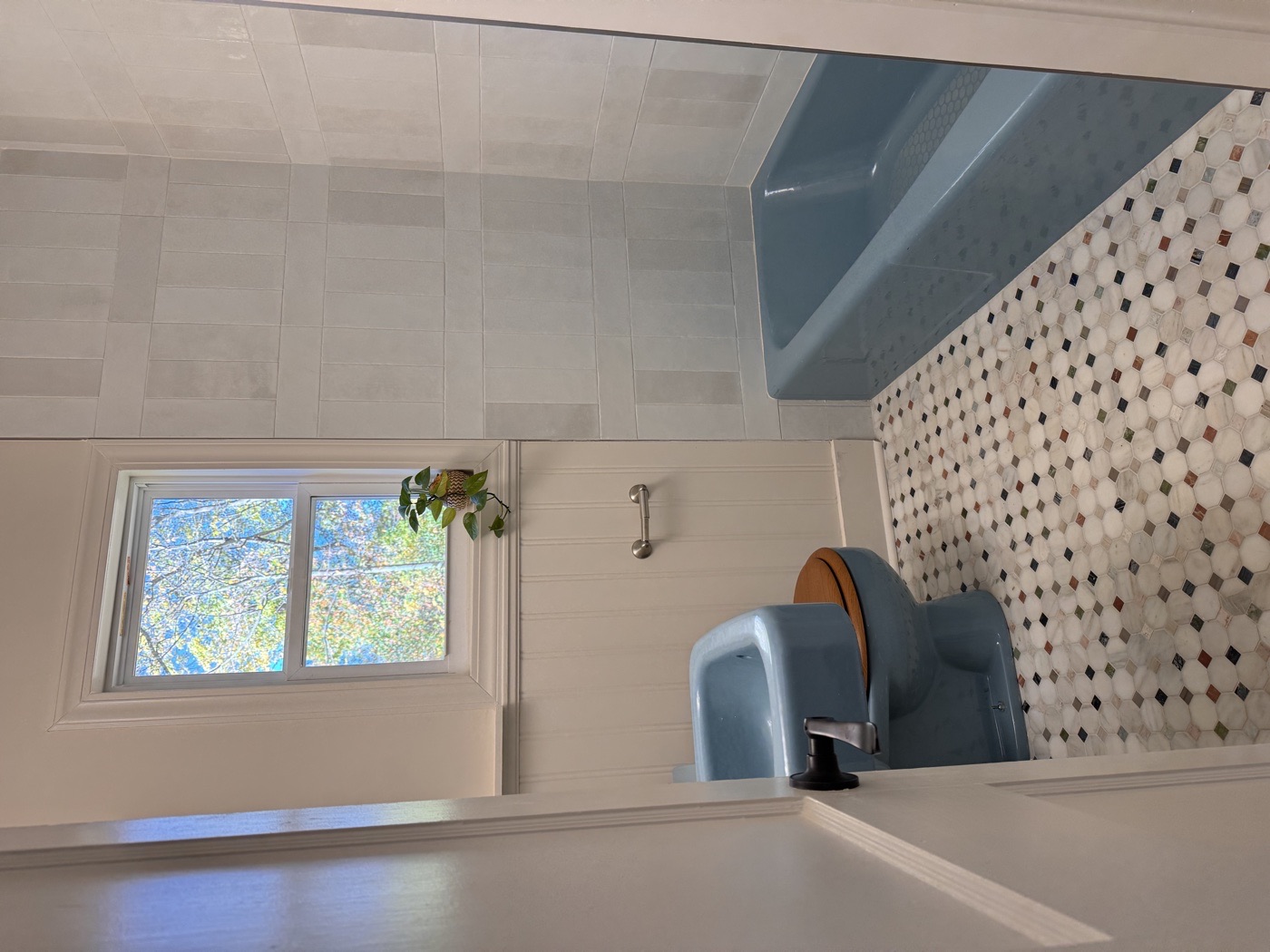
This is our favorite part of the house, and the best example of what we mean by imagination and care. The bathroom had its original blue tub, sink and toilet. The easy move would have been to rip them all out. Instead, we kept them and designed the whole room around them, with stacked glazed wall tile, beadboard wainscoting and a marble octagon mosaic floor.
The result feels fresh and clean, and it still feels like it belongs to this house. Keeping original pieces like these can save money, and it keeps a story that a brand new bathroom never could. You can see more of this room on our projects page.
 Before
 After
The front entry: a welcome home
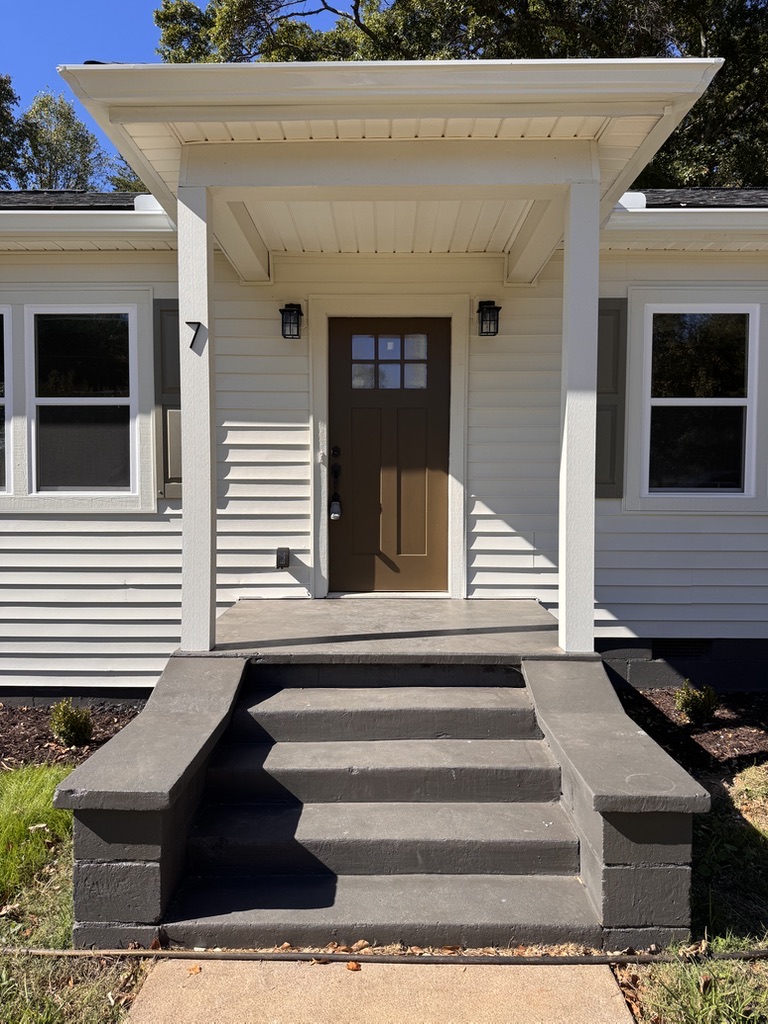
The entry had peeling trim and an old door. A new craftsman style front door, white porch columns, lantern lights and refinished steps turned it into the kind of entry that makes you want to walk inside. Small details like these carry a lot of weight in an older home.
How to tell if your house has good bones
A house has good bones when the foundation is solid, the framing is straight and dry, and the layout and lot work for you. Almost everything else can be changed.
When we walk through an older home, these are the things we look at first:
- Foundation. Is it level and solid, without major cracks, settling or water problems?
- Framing. Are the floors, walls and roof framing straight and free of serious rot or termite damage?
- Roof and moisture. Has water been getting in, and if so, how far has it spread?
- Layout. Does the floor plan work, or can it be made to work by opening a wall or reworking a room?
- Systems. What shape are the electrical, plumbing and HVAC in? These are often updated during a full renovation.
Things like old cabinets, dated tile, worn carpet, faded siding and old windows are not reasons to tear a house down. Those are the parts a renovation is meant to replace.
When rebuilding might make more sense
We will always be honest with you. Sometimes a home is not worth saving, and starting fresh with a custom home build is the smarter choice. That can be the case when:
- The foundation is failing and would need to be replaced.
- Rot, termites or water damage have reached most of the framing.
- The house would need to be rebuilt almost entirely to work for you anyway.
Because we do both renovations and new custom homes, we have no reason to push you one way or the other. We will tell you what we see.
How a whole home renovation works with BUILT by Olivier
We are a family owned builder based in Greenville, serving the Upstate of South Carolina within roughly 60 miles. Bjorn leads construction, and Laura provides in-house design for homeowners who want help with every finish and detail. Here is how a project comes together:
- Conversation and walkthrough. We visit the home, look at the structure and talk through what you need, your timeline and your budget.
- Plan and design. We scope the work and materials so there are no surprises, and help you choose finishes that fit the house.
- Build. Our team handles the work, with regular updates along the way.
- Final walkthrough. We finish together to make sure everything is right.
If you have an older home in the Upstate and you are wondering whether it is worth saving, reach out to us for a free, no-obligation quote. Bring us the house everyone else wrote off. We would love to show you what it can be.